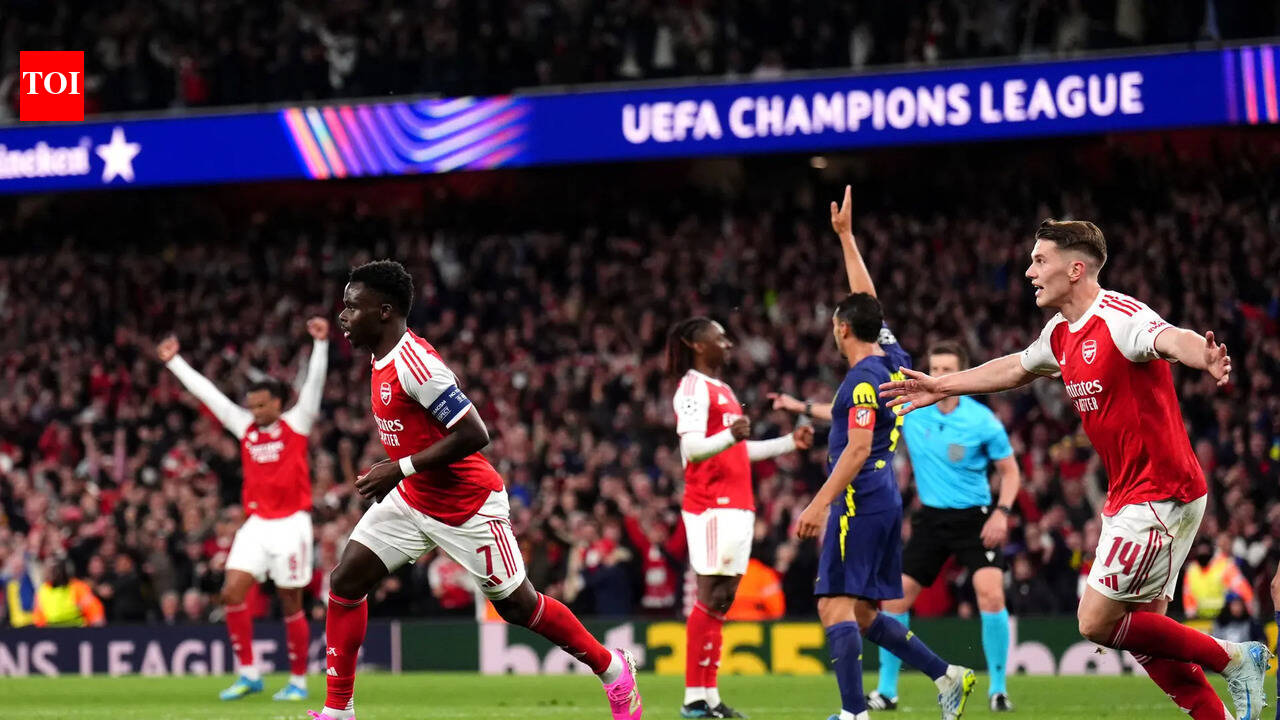
Arsenal’s 20-year exile from the Champions League final is not a burden—it is a tactical advantage, if they dare to wield it. The 1-0 semifinal victory over Atlético Madrid was not merely a scoreline; it was a masterclass in how to convert generational longing into controlled aggression. For two decades, the shadow of Barcelona 2006 haunted this club—the wasted 1-0 lead, Jens Lehmann’s red card, Thierry Henry’s phantom final. Yet Bukayo Saka’s 78th-minute strike at the Emirates did not merely punch a ticket to Munich; it shattered the psychic inertia that had calcified around this institution. The question now is whether Arteta’s group can flip that weight of history from a millstone into a flywheel.
The evidence from the Atlético tie is compelling. This Arsenal side did not crumble under the knowledge that a single mistake could end two decades of waiting. Instead, they suffocated Diego Simeone’s defensive labyrinth with patience and precision. Saka, who was six years old when Arsenal last contested a European Cup final, played with the poise of a veteran—cutting inside, drawing fouls, and finishing the winner with the outside of his boot. Declan Rice, meanwhile, completed 93% of his passes while neutralizing Koke and Rodrigo De Paul in midfield. The psychological profile of this squad is distinct from the 2006 team: those Gunners had never tasted final success; these Gunners have grown up watching Arsenal fail. That familiarity with failure breeds either fear or fury. Against Atlético, they chose fury. The 0.89 xG they created against the best defensive side in La Liga—without a recognized striker for 70 minutes—proves that structure, not sentiment, drove the result.
The implication for the final is clear: Arteta must weaponize the narrative rather than fight it. History is only a burden when players feel responsible for redressing the past themselves. This Arsenal team has no single player carrying the ghost of Henry or Bergkamp—they have a system. Martin Ødegaard dictates tempo like a metronome; William Saliba and Gabriel Magalhães have conceded just three goals in ten Champions League knockout matches combined. The 20-year wait has created an army of desperate supporters, but it has also forged a squad that knows exactly what it is playing for. In soccer, a shared, tangible mission—"end the drought"—can override individual pressure. The 2005 Liverpool side and the 2012 Chelsea side proved that history is a fuel, not a fire hazard, when channeled through collective discipline.
Here is the verdict: Arsenal will win the Champions League final. Not because of talent alone—Bayern or Real or City will provide stiffer opposition than Atlético—but because this squad has already survived the one thing that destroys contenders: the weight of itself. They walked into a semifinal knowing that a loss would mean another decade of "what if" and they walked out unbeaten. In Munich, they