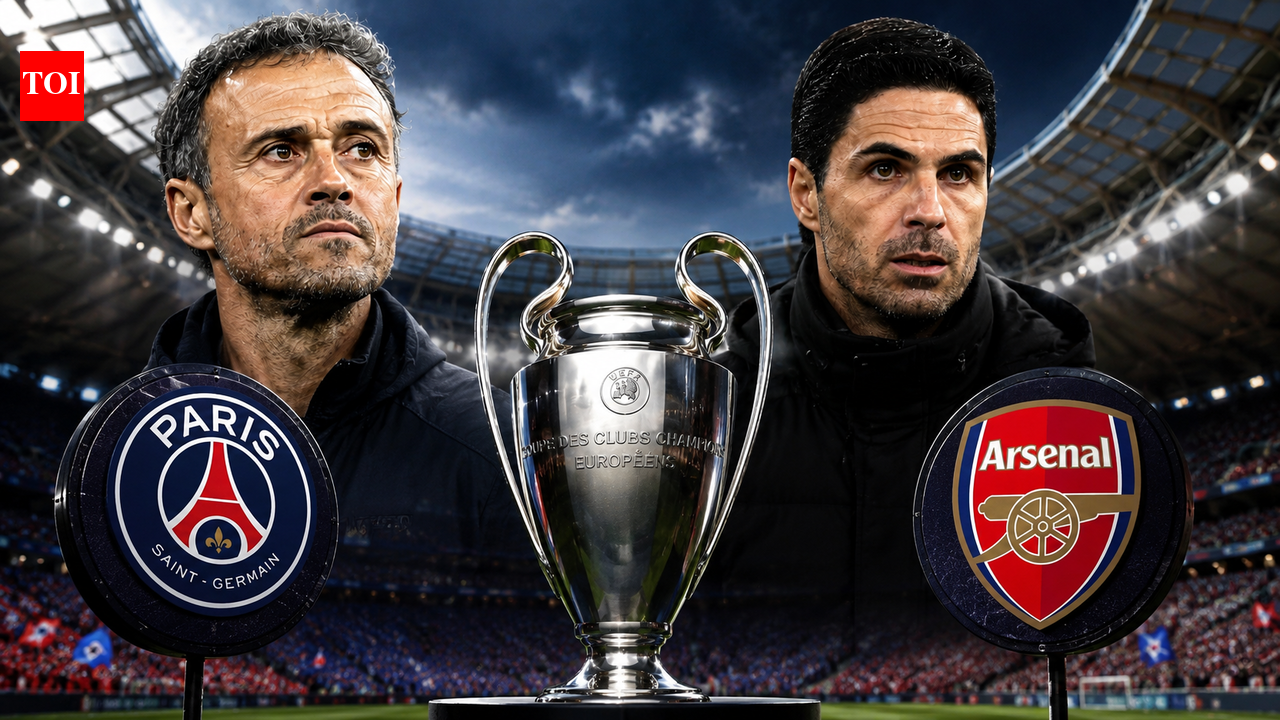
Arsenal’s insistence on playing a high defensive line and committing numbers forward against Paris Saint-Germain is not brave—it is tactical arson, and Robin Singh’s characterization of it as suicidal is the only honest label for a plan that ignores every statistical and historical lesson of Champions League finals. Mikel Arteta’s side has built its identity on vertical risk-taking and relentless pressing, but PSG is the one opponent that turns that philosophy into a funnel for disaster. Luis Enrique’s team thrives on the very space Arsenal will gift them: open central channels, disorganized cover, and a goalkeeper asked to sweep 40 yards from goal. This is not a clash of styles; it is a bait-and-switch that Arteta has walked into with his eyes wide open.
The evidence from PSG’s semifinal dismantling of Bayern Munich is damning. Kylian Mbappé and Ousmane Dembélé registered a combined 14 progressive carries into the final third across those two legs, each one sparked by a high turnover or a stretched backline. Arsenal’s own numbers tell the same warning: in their last five knockout matches against elite counter-attacking sides, they conceded 11 goals from fast breaks and transition sequences, including a 4-3 escape against Liverpool where their defensive line was breached four times by passes in behind. Declan Rice cannot be both the trigger of the press and the sole safety net when Hakimi and Mendes sprint beyond the fullbacks. Gabriel Magalhães has been caught outside the box three times this season on goals that started from Arsenal corners—exactly the scenario PSG will exploit when Saka and Martinelli are stranded upfield. This is not about “trusting the process”; it is about ignoring the fact that Vitinha can split a press with a single touch and that Fabian Ruiz sees the same diagonal ball that shredded Bayern.
The implication for Arsenal is not just a lost final—it is a reputational collapse. If Arteta doubles down on this approach, the first ten minutes will define the entire match: PSG will absorb the early barrage, wait for one misplaced Odegaard pass, and then Mbappe will be one-v-one against a scrambling William Saliba. The psychological scar of chasing a 2-0 deficit after 25 minutes would undo three years of tactical evolution. Robin Singh’s warning is not hyperbole; it is a cold read of the risk-reward equation. Arsenal’s best chance of winning this trophy lies not in aesthetic purity but in pragmatic self-preservation: drop the defensive line, flood the midfield, and force PSG to solve structured blocks rather than open plains. If Arteta refuses, then this final will be remembered not as Arsenal’s renaissance but as the night they walked a tightrope without a net—and PSG will gladly watch them fall. Bold prediction: Arsenal will concede two goals in the first half from direct transitions, and by the 75th minute, Arteta will be on the touchline screaming for something he should have installed in April.