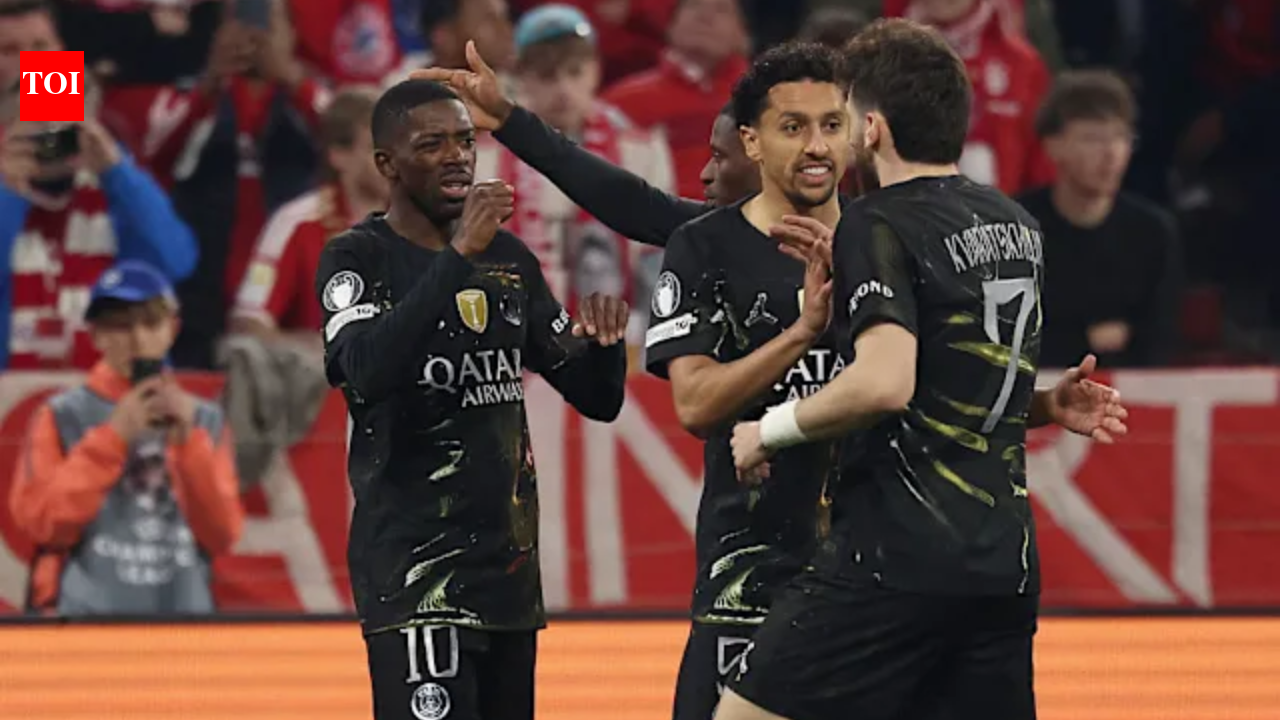
Luis Enrique has done what no PSG manager before him could: he has made the Parisians boring, and that is why they are heading back to the Champions League final. By engineering a 6-5 aggregate triumph over Bayern Munich—secured by Ousmane Dembélé’s decisive strike—the Spaniard finally exorcised the club’s romantic obsession with individual brilliance in favor of a cold, pragmatic structure built to survive the knockout gauntlet. This PSG side no longer tries to outshine opponents; it outlasts them.
The evidence was on full display across both legs, but especially in the hostile cauldron of the Allianz Arena. Bayern dominated possession at 64%, recorded 22 shots to PSG’s 9, and generated an expected goals total north of 3.0 across the tie. Yet they lost. Why? Because Luis Enrique’s system is designed to absorb pressure without breaking. The central midfield trio of Vitinha, Warren Zaïre-Emery, and João Neves formed a compact, three-man shield that refused to be stretched—no matter how wide Alphonso Davies or Raphaël Guerreiro overlapped. When Jamal Musiala drifted inside, he was met by a double pivot that rotated flawlessly, forcing him into low-percentage shots from outside the box. And when Bayern overloaded the right flank through Leroy Sané, PSG’s full-backs, Nuno Mendes and Achraf Hakimi, tucked in like auxiliary center-backs, daring Bayern to cross into a crowded six-yard box where Gianluigi Donnarumma claimed everything. This was not art; it was arithmetic.
The implication is profound. For years, PSG football meant letting Neymar and Kylian Mbappé improvise while the rest of the team watched. That approach delivered memorable group-stage routs but fatal defensive lapses—think the 2019 collapse against Manchester United or the 2022 meltdown against Real Madrid. Luis Enrique has euthanized that culture. He demands that even his most gifted attackers defend from the front. Dembélé, the hero of the tie, spent as much time tracking back to dispossess Joshua Kimmich as he did slicing Bayern’s backline on the counter. The decisive goal was a microcosm: a patient build-out from Donnarumma, a precise diagonal from Vitinha, and a clinical one-touch finish from Dembélé after a cutback—no dribbling circus, just ruthless efficiency. This team does not need Mbappé to be magic every night. It needs every player to execute a defined role within a controlled chaos. That is how you survive two-legged ties against the giants of Europe.
Make no mistake: the old PSG would have conceded a fourth goal in Munich and crumbled. This version held firm, conceding only on a set-piece deflection and a world-class Harry Kane strike. The tactical blueprint is now public. Whether it is enough to win the final depends on whether the discipline holds under the ultimate pressure. But one thing is certain: for the first time in their history, PSG enter a Champions League final not as the team with the most stars, but as the team that knows exactly who it is. That is Luis Enrique’s legacy. And it will be enough to bring the trophy to Paris.