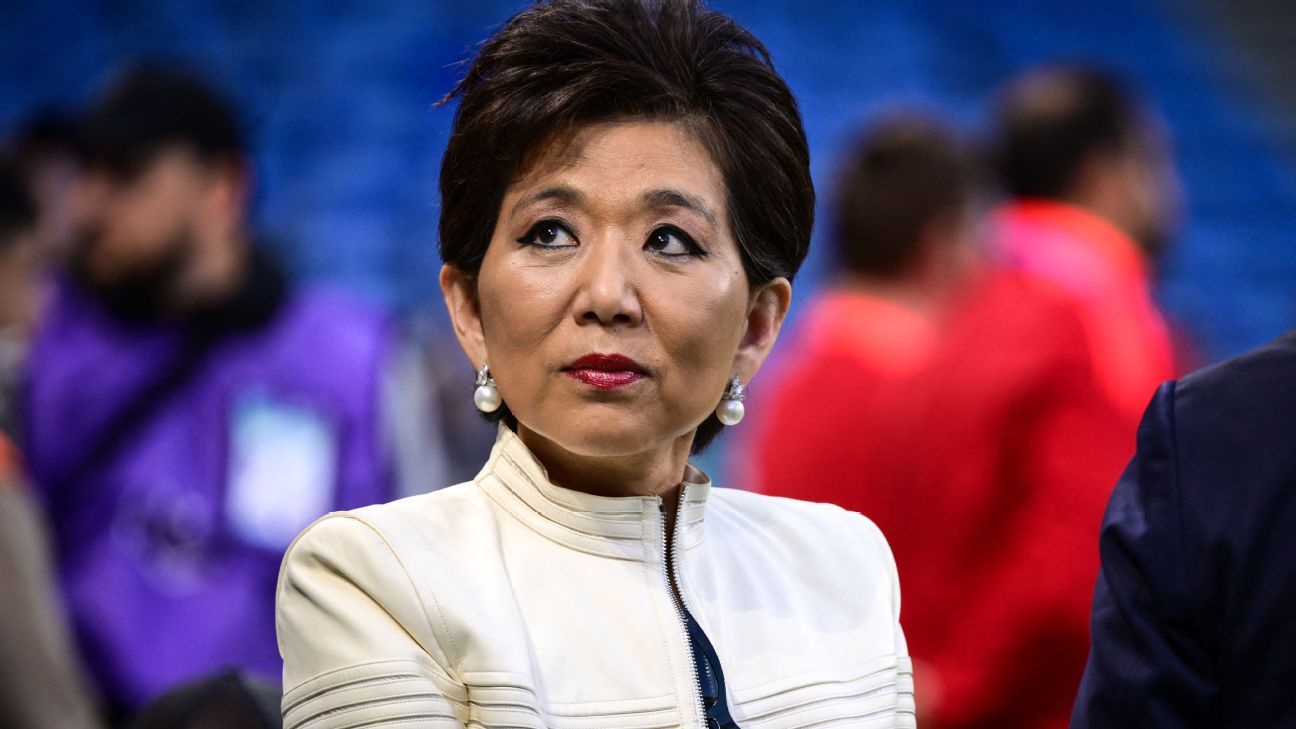
Nadine Kessler has drawn a line in the grass that the men’s game was too cowardly to touch: multi-club ownership will not be allowed to metastasize in the Women’s Champions League. This is not a bureaucratic footnote; it is a moral pivot. While UEFA’s men’s side has spent years fiddling with financial fair play thresholds while letting Red Bull GmbH park three teams in European competition and City Football Group treat Girona and Manchester City like interchangeable pawns, Kessler has simply said no. The structural rot that has turned the men’s Champions League into a corporate chess match—where a Leizpig vs. Salzburg tie triggers a conflict-of-interest shrug, not a ban—will not be imported into the women’s game. That is a verdict, and it is overdue.
The evidence is everywhere in the men’s competition, and it is damning. When RB Leipzig and RB Salzburg met in the 2018-19 Europa League, UEFA’s own rules were bent into a pretzel to allow it. When Manchester City and Girona both qualified for this season’s Champions League, the response was a tepid ‘monitoring’ arrangement that let Pep Guardiola effectively scout his own affiliates in real time. These are not isolated failures; they are the inevitable outcome of an ecosystem where owners with deep pockets assemble multi-club networks as if collecting Pokémon cards. Kessler has watched this unfold, and her explicit confirmation that the Women’s Champions League will enforce ownership separation means that a club like Lyon—unbeaten in domestic play for months—cannot be quietly absorbed into the same conglomerate that already controls, say, a top-flight Italian side. This is preemptive surgery before the tumor takes hold.
The implication is stark: the women’s professional landscape will remain a competition of distinct identities, not branches of the same holding company. For players like Pernille Harder, who left Chelsea for Bayern Munich in search of a new challenge, or managers like Jonas Eidevall, who built Arsenal’s system free from ownership-imposed roster shuffles, Kessler’s doctrine guarantees that their ambition is tested against real rivals, not puppet squads. This means that a Barcelona with Alexia Putellas and a Lyon with Wendie Renard will face each other as sovereign entities, not as two shells of a united parent brand. The bold forward-looking verdict is this: within five years, the Women’s Champions League will be the only UEFA club competition where a fan can believe the result is honest. Kessler has ensured that the rot stops here—and the men’s game should be taking notes, because the spectators are already watching.