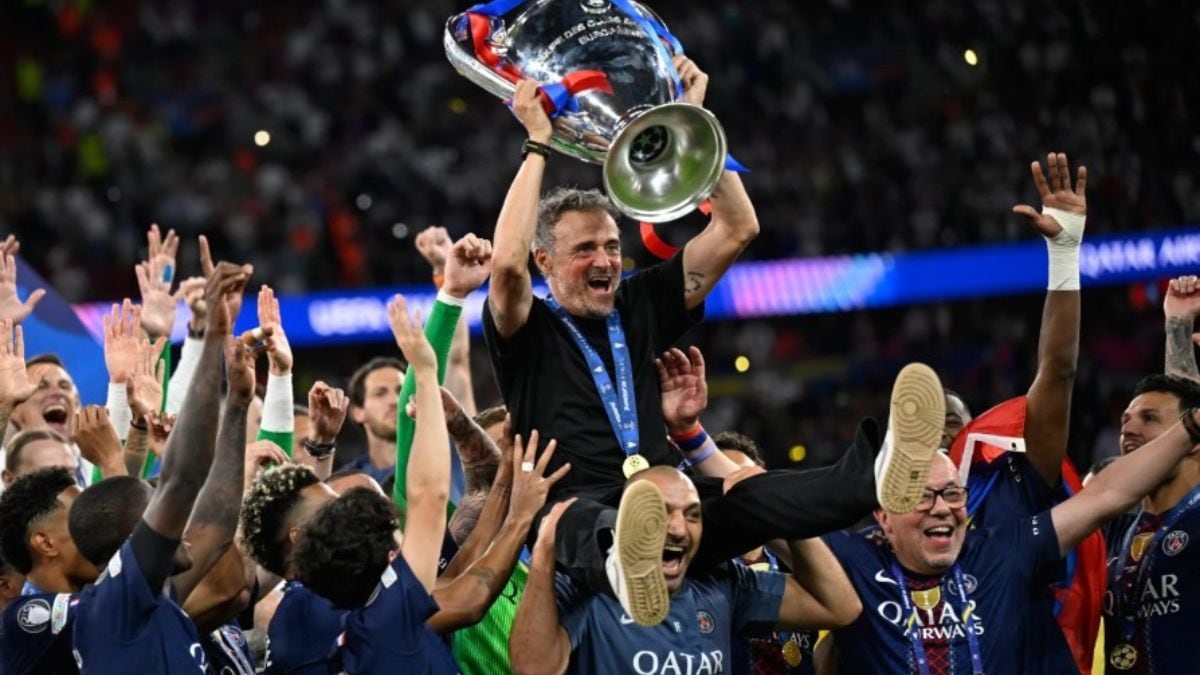
The Champions League’s piracy crisis is not a failure of law enforcement but a self-inflicted wound born from UEFA’s refusal to make the world’s greatest club competition accessible to the fans who care most. Sixteen million illegal streams of the PSG-Arsenal final weren’t a crime wave; they were a market signal that the current broadcast model is rotting from the inside, and pretending that tougher crackdowns will solve anything is either delusional or dishonest.
Let’s be specific about what happened on that pitch in Munich. Arsenal’s Martin Ødegaard was pulling strings from deep, sliding a through ball to Bukayo Saka that carved PSG open in the 22nd minute. Kylian Mbappé responded with a devastating diagonal run, leaving William Saliba grasping at air before he slotted past David Raya. The match had everything—tactical chess between Mikel Arteta and Luis Enrique, a late header from Gabriel Magalhães, and a stunning stop from Gianluigi Donnarumma on Leandro Trossard. Yet for every fan who paid €30 for a legitimate stream or a pub cover charge, dozens more watched on bootleg sites because the official route required a €70 monthly cable bundle or a geo-restricted platform that blacked out half the continent. UEFA sold the exclusive rights to a patchwork of broadcasters who then buried the final behind paywalls and password-sharing bans. The result: a generation accustomed to Spotify and YouTube sees the Champions League as a luxury product, not a shared cultural event.
The implications cut deeper than lost subscription revenue. When 16 million people choose to pirate a final, they are not rejecting the sport—they are rejecting the gatekeepers. The average age of a Champions League viewer has crept above 40, and the trend is accelerating. Teenagers in Lagos, São Paulo, and Manchester are watching Mbappé’s brilliance on a third-party site with Arabic commentary because UEFA’s official app demands a credit card they don’t have. Meanwhile, the league invests millions in anti-piracy software that flags the streams after the match is already over. This is not a technological arms race; it is an organizational failure to recognize that exclusivity is a poison pill. The same logic that killed linear television is now eating the Champions League from inside. If UEFA continues to treat accessibility as an afterthought, it will wake up to a sport that has become a museum piece for aging subscribers, while the next generation flocks to whatever league—or esport—gives them what they want without a password.
Here is the bold verdict: within five years, UEFA will be forced to launch its own direct-to-consumer streaming platform with a flat monthly fee that undercuts every traditional broadcaster, or it will watch Champions League piracy numbers double to 30 million—and the final will become the most-watched event that nobody officially watched. The choice is not between enforcement and surrender. It is between adaption and irrelevance.