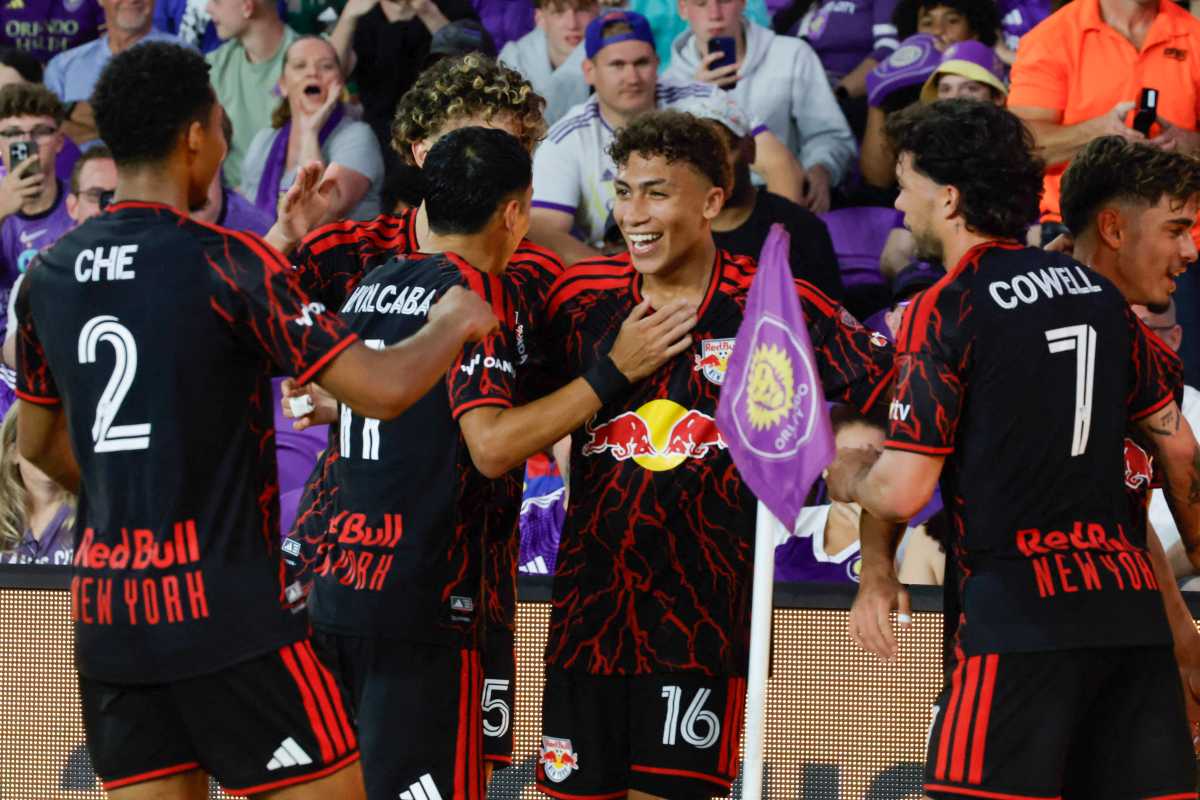
The selection of 18-year-old Julian Hall to the 2026 MLS All-Star team is not a celebration of emerging talent—it is a transparent branding exercise that masks the league’s systemic failure to develop its own homegrown prospects. By anointing Hall as the poster child for a supposed youth movement, MLS is cynically borrowing the glow of promise while doing too little to give players like him the competitive soil in which to grow roots.
Let’s be honest about what Hall has actually done. He has logged a fraction of the minutes that established stars like Luciano Acosta or Cucho Hernández have played this season, and his raw numbers—three goals and two assists over 450 league minutes—do not remotely merit an All-Star nod by any performance metric. Compare that to 16-year-old Cavan Sullivan, who was famously given a landmark first-team contract by the Philadelphia Union only to watch his playing time vanish into the bench depths as Jim Curtin’s tactical rigidity took precedence. Or consider the case of Diego Luna at Real Salt Lake: finally given a leash, he has rewarded the league with creativity that earned a national team call-up, but only after years of piecemeal cameos. MLS has a pattern of promoting youth with marketing campaigns—think “Don’t Call It a Comeback” for the All-Star Game itself—while letting the actual development pathways rot. Hall’s selection creates a false equivalence: appearing in a midseason exhibition alongside Lionel Messi does not equal a structured pipeline from academy to first team.
The deeper implication is that MLS is afraid of its own product. Rather than trust the unglamorous work of building a domestic talent machine—consistent minutes, tactical patience, and tolerance for mistakes—the league uses All-Star week as a smoke screen. Real developmental leagues, like the Bundesliga or the Eredivisie, do not need to shoehorn a teenager into an exhibition to prove they care about youth; they just play them week in and week out. Atlanta United’s decision to loan out Tyler Wolff for years instead of trusting him as a rotational piece, or the New York Red Bulls’ own track record of trading away academy graduates like Cameron Harper, tells you everything about the structural incentives. Hall may be a genuine talent—I watched him shred a tired Chicago Fire defense in June with a diagonal run that screamed instinct—but his All-Star selection is not a reward for growth; it’s a head pat that lets the league stay comfortable with its own complacency.
If MLS actually wants a youth movement, it must start prioritizing competitive minutes over exhibition symbolism. The league should mandate a minimum domestic minutes floor for every club, the way the A-League in Australia did to revive its talent pool, rather than inflating a single teenager’s Instagram presence. Until then, Julian Hall will be a footnote in a league that prefers to market its future rather than build it. Bold verdict: In five years, unless MLS redesigns its roster construction rules, Julian Hall will be remembered not as an All-Star, but as the warning sign the league ignored.