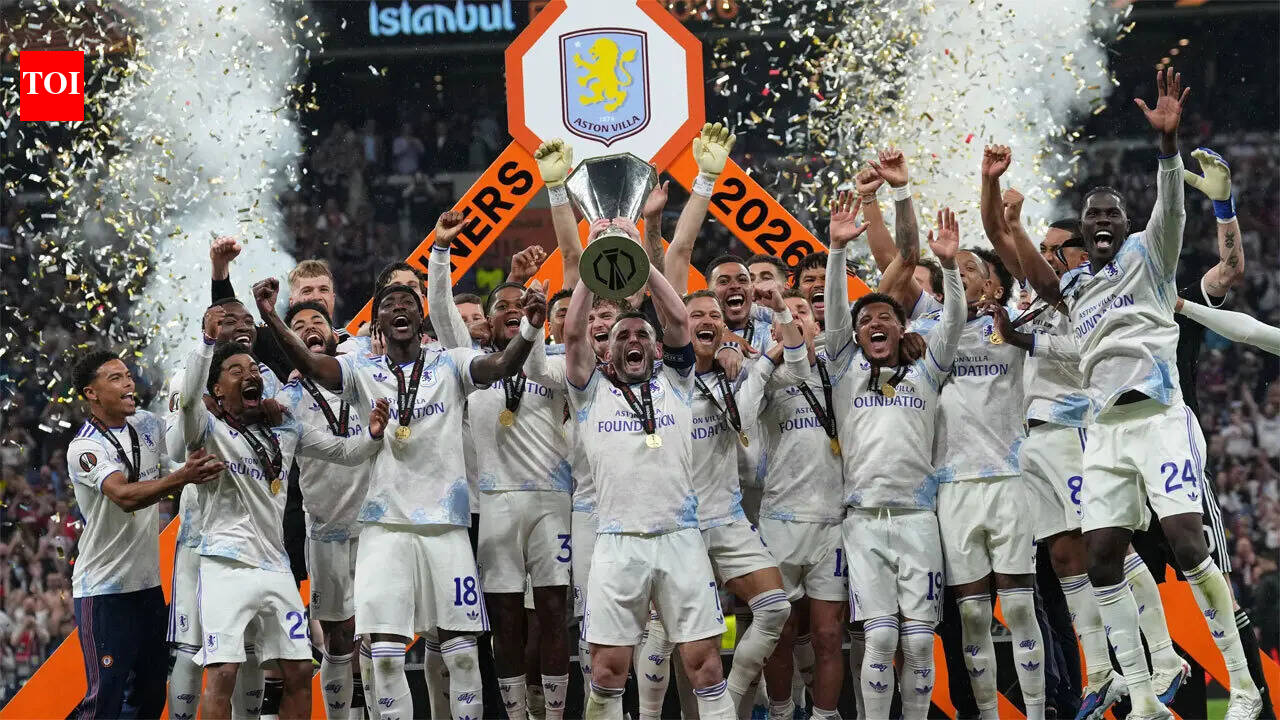
Aston Villa’s 2-1 victory over Freiburg in the Europa League final was never just a trophy; it was a coronation that rewrites the club’s entire modern identity and cements Unai Emery as the most transformative figure in Villa Park’s recent history. For thirty years, Villa wandered through the wilderness of mid-table mediocrity, occasional cup runs that fizzled, and a persistent sense that greatness belonged to a bygone era of European Cups and league titles. That narrative died the moment Ollie Watkins slotted home the winner in the 73rd minute, a goal sculpted by the tactical discipline and ruthlessness that has become Emery’s signature. This is not merely ending a drought—it is a permanent genetic mutation of what Aston Villa believes it can be.
Emery’s mastery of this competition is now beyond dispute: four Europa League titles with three different clubs, each conquest adding a new layer to his legend. But this triumph in Gdansk felt different because it rewired Villa’s entire structural DNA. Consider the evidence from the final itself: Freiburg, with their relentless pressing and Christian Streich’s intricate positional play, had Villa pinned back for the opening twenty minutes. Yet Emery’s side absorbed the pressure with a composure that would have been unthinkable under previous regimes. When Boubacar Kamara intercepted a loose pass and instantly released Leon Bailey down the right, the sequence that led to Watkins’ goal was pure Emery—vertical, patient, and devastatingly efficient. Contrast this with the Villa teams of Steve Bruce or Dean Smith, who often panicked when confronted with superior tactical systems. Emery has instilled a cold-blooded intelligence that transforms adversity into advantage. The evidence is not just one final; it is the entire run: dismantling Ajax’s youthful vigor in the quarterfinals, outlasting a resilient Roma side in the semis, and now grinding down one of the Bundesliga’s most sophisticated outfits. Each match displayed a tactical flexibility—switching from a high press to a mid-block, alternating between 4-4-2 and 4-2-3-1—that proves Villa no longer plays like a club haunted by history but like one defining it.
The implications for Villa’s future are seismic and irreversible. This victory guarantees Champions League football next season, accelerating the project beyond what even the most optimistic owners could have envisioned. More importantly, it changes the player recruitment dynamic. World-class talents who previously saw Villa as a stepping stone or a retirement home now view it as a destination where European silverware is plausible. You only have to watch the way Douglas Luiz—once a speculative signing from Manchester City’s reserves—or Jacob Ramsey, a homegrown talent, performed in the final: with the authority of veterans, not novices. Emery has not merely won a trophy; he has created a culture where young players believe they belong on the biggest stage. The selection of Youri Tielemans, a player rejuvenated from Leicester’s ashes, to be the midfield metronome against Freiburg underscored Emery’s knack for extracting maximum value from overlooked assets. This victory will also deter the vultures who circle Villa’s best players each summer—you don’t leave a project on the verge of sustained success for one that might not offer European nights at all.
Here is the bold forward-looking verdict: Aston Villa will not regress. Under Emery, they will win the Premier League within the next four seasons. The Europa League coronation is not a peak—it is the foundation stone of a dynasty that will force the established elite to take notice. The Villa coronation has permanently altered the club’s DNA