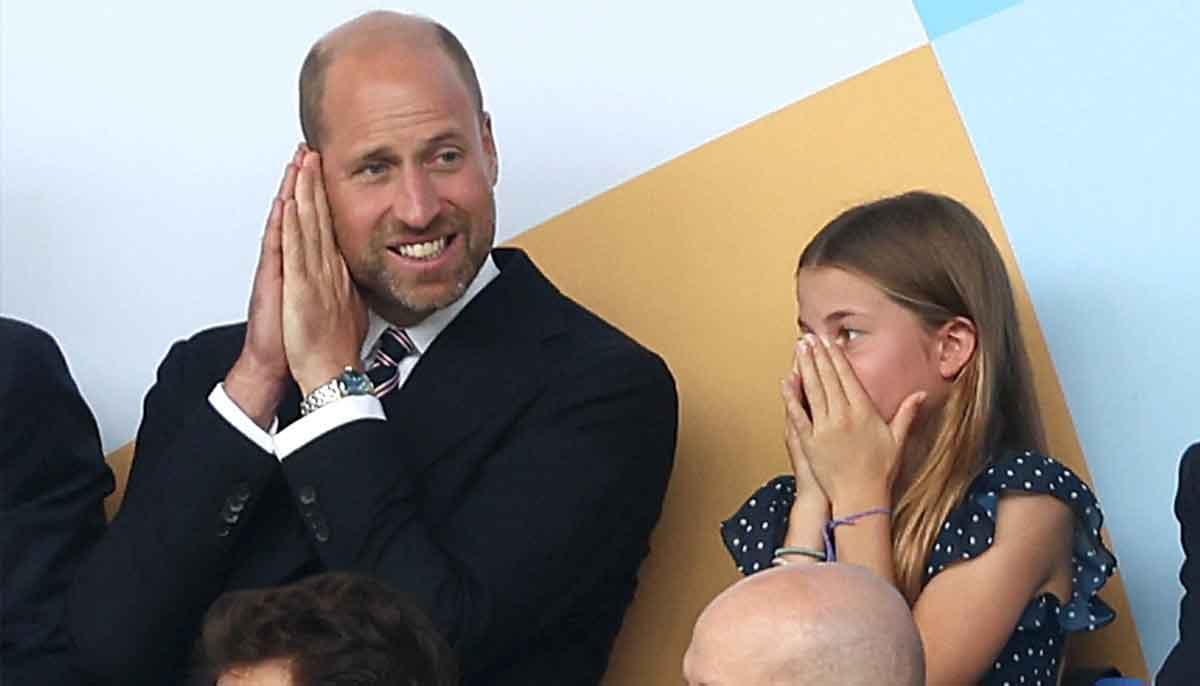
Prince William’s decision to disclose Princess Charlotte’s footballing allegiance exactly two days after Aston Villa’s Europa League victory is not a charming fatherly aside—it is a calculated brand pivot, leveraging the club’s moment of peak public adulation to repair the monarchy’s connection with a working-class sport that has long viewed the royals as distant figureheads. The timing is too precise, the optics too convenient, to be anything but a strategic rollout.
Let’s unpack the evidence. Villa’s triumph—a gritty, counterattacking masterclass that saw Unai Emery’s side dismantle a shell-shocked opponent in the final—was massive for the club’s identity. Ollie Watkins’ relentless pressing and a commanding performance from Pau Torres gave the West Midlands its first European trophy in over four decades. The celebrations were raw, authentic, and deeply local. Two days later, the Prince of Wales—himself a Villa fan since childhood—strolled into a charity event and casually dropped that Princess Charlotte prefers the same claret and blue. This was no accidental spill. The royal family has used personal anecdotes to humanize itself for decades, but here the lag between Villa’s glory and Charlotte’s “choice” creates an unmistakable causal link. William is not just celebrating his team; he is re-branding the monarchy as populist, one Instagram-friendly confession at a time. You don’t need a Palace press release to see the pattern: after the Coronation’s pageantry felt out of touch, after the Queen’s death exposed a fragile institution, the Wales family is scrambling to wear the club crest of the people.
The implication is twofold. First, William is using Villa’s now-global spotlight to shield his family from accusations of elitism. A Villa-supporting princess is a deliberate contrast to the fusty, horse-racing, polo-playing image of older generations. Second, he is weaponizing the football calendar. He not only attended the final but was photographed beaming in the stands—a visual that ran on every sports segment in Europe. By tying Charlotte’s allegiance directly to that euphoric moment, he ensures that any future criticism of the monarchy will at least be softened by the glow of a club triumph. Real Villa fans, who chanted his name at Wembley, are now more likely to defend the Prince against republican sentiment. It is a textbook co-opting of tribal loyalty.
Now for the verdict. Expect this to become a template. When Birmingham’s other clubs—or even rivals—lift silverware, watch for another Wales family “reveal.” Prince Louis’s passion for a newly promoted Championship side? Princess George’s alleged love of an underdog? The monarchy is learning that in post-Brexit Britain, domestic football’s grassroots authenticity is more valuable than any royal tour. They are borrowing the crowd’s joy to prop up a fading throne. And William knows his timing: he gambled that Villa’s Europa League win would be the perfect stage. He was right. The next time you see a royal in a football shirt, ask yourself whose brand strategy is really on display.