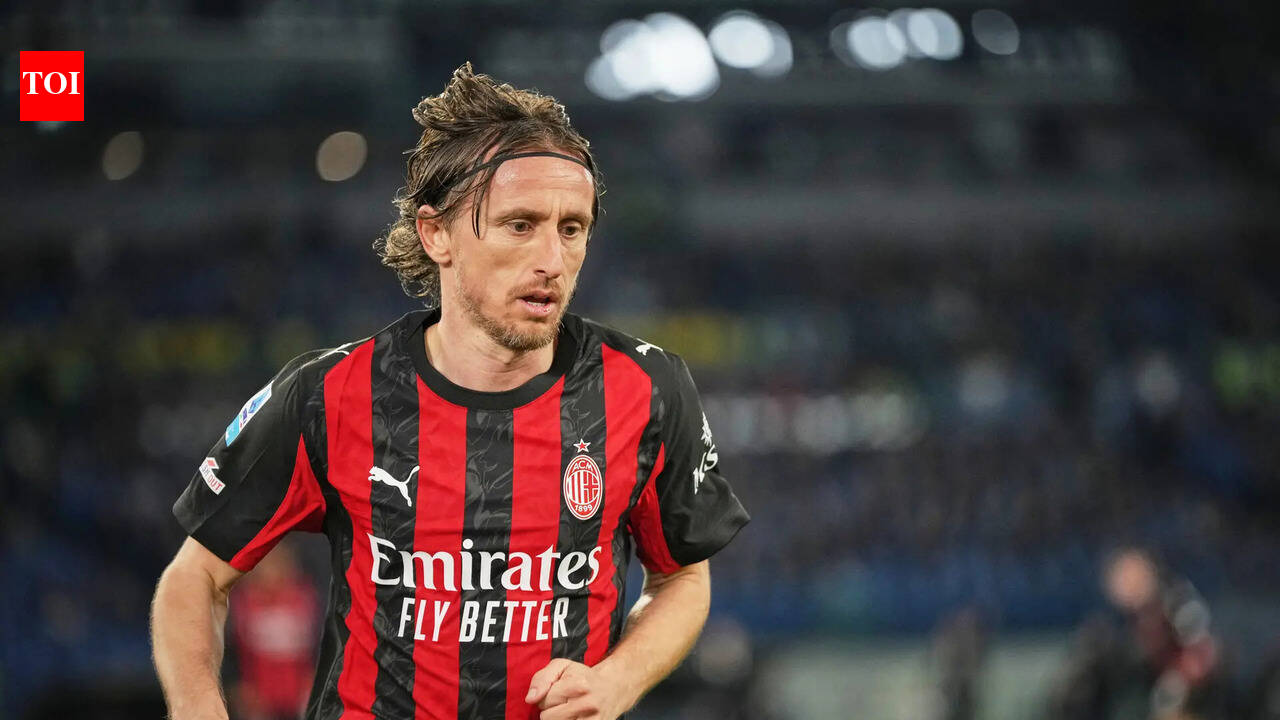
AC Milan’s decision to hand Luka Modrić a one-year extension through 2027 is not a romantic farewell tour—it is a white flag waved by a club that has abandoned the hard work of building a midfield for the next decade. The 40-year-old Croatian, sublime as ever in tight spaces, cannot mask the rot: a market so terrified of investing in unproven talent that it prefers to reanimate a legend rather than endure the growing pains of the next generation.
Watch Milan’s recent outings against Fiorentina and Napoli, and the pattern is unmistakable. When Modrić is on the pitch, the passing lanes open; when he is subbed off, the rhythm collapses into frantic sideways shuffling. That reliance exposes a front office that, since selling Sandro Tonali to Newcastle in 2023, has cycled through Yunus Musah, Ruben Loftus-Cheek, and Ismaël Bennacer without ever trusting a single young midfielder to own the tempo. At the San Siro, Modrić now averages 90 minutes per game in Serie A—more than he ever logged in his final year at Real Madrid. Meanwhile, across the continent, Jude Bellingham runs games at 21, Eduardo Camavinga anchors Real’s transitions at 22, and Enzo Fernández struggles to impose himself at Chelsea precisely because he was bought for a fee that demands instant results, not patient cultivation. The irony is that the same clubs that splashed cash on ready-made stars now watch Milan and claim there is a shortage of elite midfielders. There isn’t. There is a shortage of courage.
The implication is more damning than a single contract. By extending a 40-year-old, Milan signals that tactical growth is optional for younger players—they can simply wait for the old guard to retire. The backroom staff under Paulo Fonseca has yet to develop a single homegrown or early-twenties midfielder capable of reading the game like Modrić. Compare that to what Pep Guardiola did with Phil Foden at Manchester City, or what Xabi Alonso is doing with Florian Wirtz at Bayer Leverkusen: absorbing a veteran’s wisdom while earning minutes, not inheriting a throne. Milan’s gamble may yield a respectable Europa League run this spring, but it will cost them the identity necessary to compete in the Champions League era. The market will only grow more frantic, more desperate, more willing to pay for nostalgia instead of foresight.
Here is the bold prediction: by the spring of 2027, just as Modrić’s extension expires, AC Milan will be linked to another 38-year-old—a recycled Karim Benzema, a luring of a past-it Toni Kroos out of retirement—because they will have spent six years avoiding the one thing they cannot buy: a midfield built from the ground up. The Modrić Paradox is not a tribute; it is a warning. And no amount of vintage footwork can fix that.