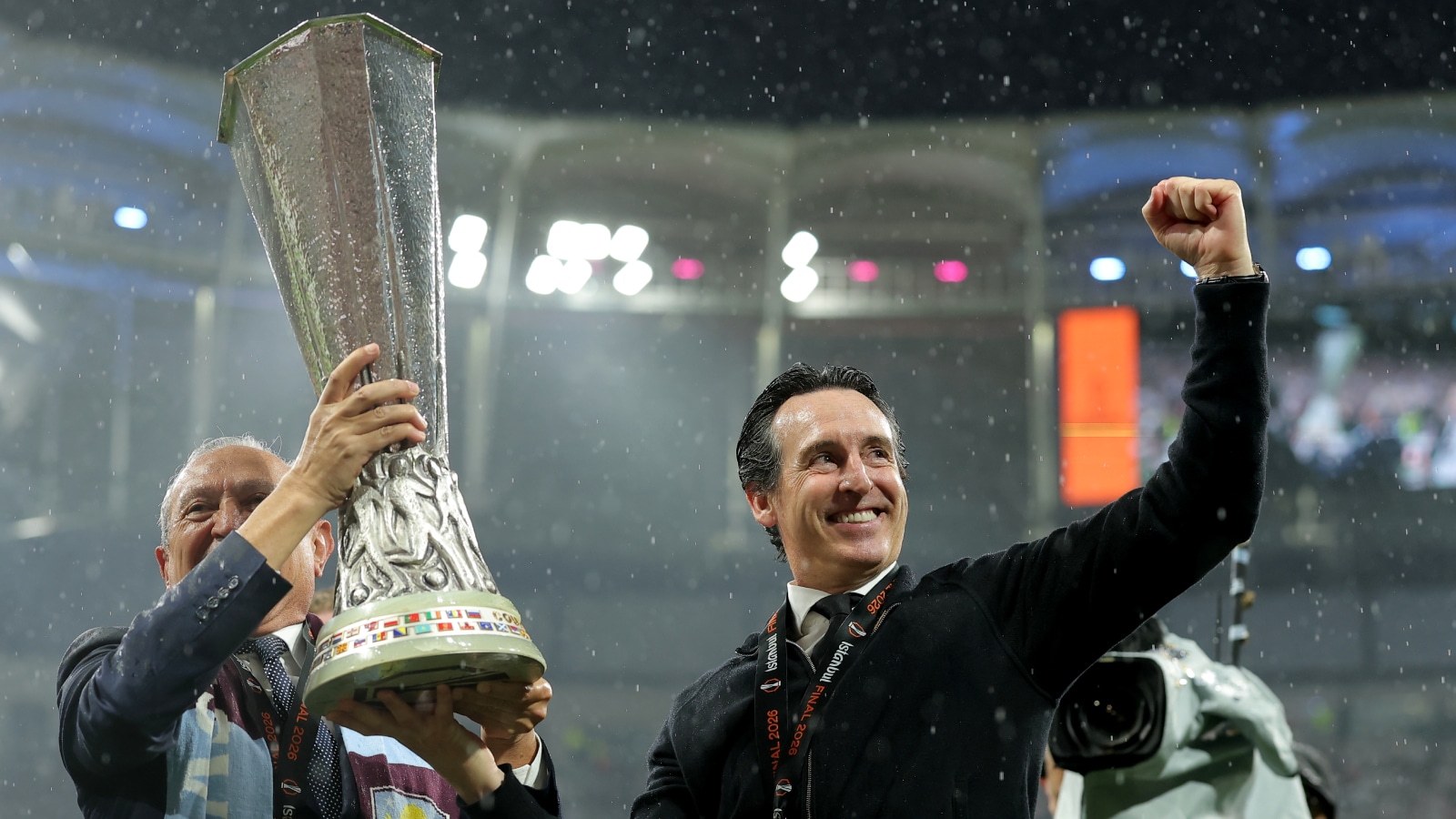
Unai Emery’s obsession with 40 daily three-minute blitz chess games is not a quirky release valve; it is the cognitive engine that drives his unmatched tactical flexibility in the Europa League. While other managers rely on data analysts or pre-set formations, Emery trains his brain to process rapid permutations of threat and counter-threat, exactly as he does on the pitch. The pain of losing a chess match, he says, outweighs the pain of losing a football game—a statement that reveals a mind wired to treat every decision as a high-stakes sequence of cause and effect. That mindset is the invisible architecture behind his three Europa League titles and his ability to transform mid-tier rosters into tournament killers.
Consider the 2021 Europa League final, when Emery’s Villarreal faced Manchester United. On the board, Ole Gunnar Solskjær had the deeper squad and more expensive pieces. But Emery, in his pre-match preparation, had already run the equivalent of 40 blitz variations: he knew that if he pinned United’s full-backs with Gerard Moreno’s movement and allowed Dani Parejo to overload the center, he could force errors in transition. The result was a masterclass in positional adjustment—Villarreal never looked comfortable, but Emery’s side never lost its shape, even as the match stretched into penalties. More recently, with Aston Villa, his chess logic was on display in the 2024 Europa Conference League run: when Pau Torres was pressed high, Emery instantly shifted his defensive line to a flat four, then back to a high trap within minutes, confounding opponents like Lille and Ajax who lacked the same computational speed. The pattern is unmistakable—Emery does not just react; he pre-loads responses like a blitz player anticipating the next eight moves.
The implication for the current Europa League landscape is stark. As the tournament enters its knockout phase, managers with rigid systems—like José Mourinho’s Roma or Xabi Alonso’s Leverkusen—will find themselves outmaneuvered not by superior talent, but by a manager who treats every minute of a match as a compressed chess clock. Emery’s Aston Villa side is not the most gifted in the competition, but his ability to pivot between a low block and a press within the same half, to sacrifice a pawn like a wide player to expose a king-side weakness, gives him a structural edge that pure athleticism cannot overcome. Look for Emery to dismantle a favorite in the quarterfinals by forcing a cascade of forced errors, the same way he would win a blitz game on time pressure. My verdict: Aston Villa will reach the final, and the man who dreads losing a chess match more than a football match will hoist the trophy because he has already played every conceivable endgame in his head before the ball is kicked.