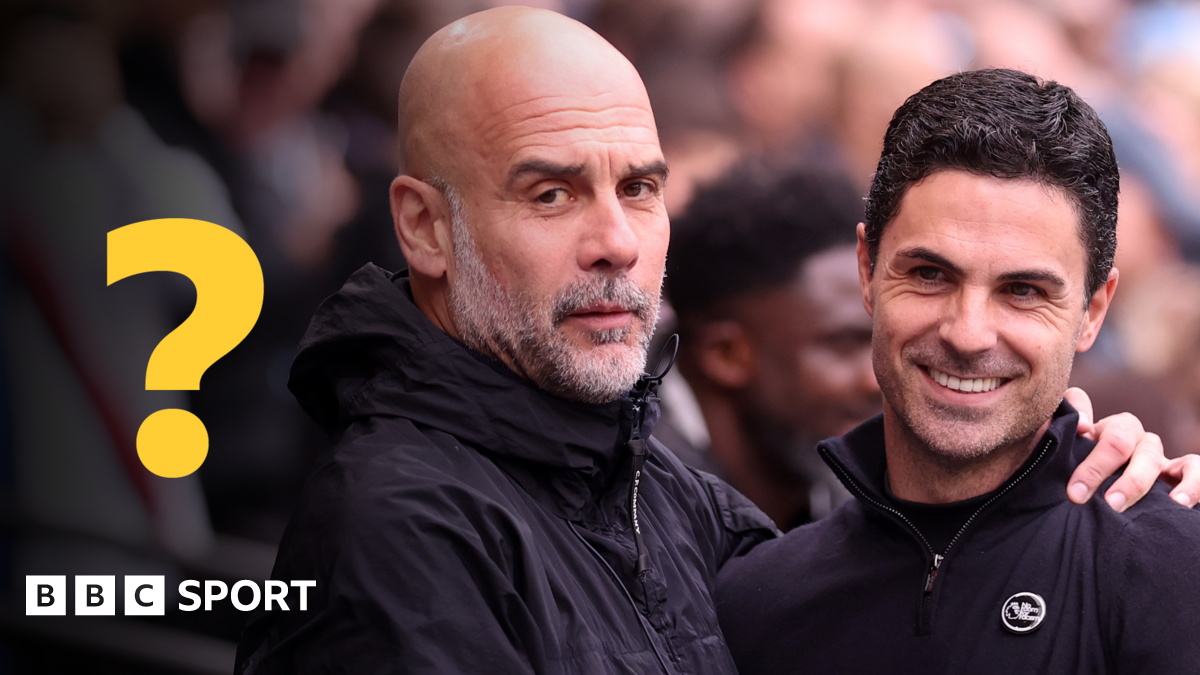
Pep Guardiola leaves the Premier League as its second-most successful manager by trophy count, but that statistic is a mirage that obscures a fundamental truth: he has not fundamentally changed how English football thinks, builds, or develops—and his departure will expose the fragility of his empire.
The evidence lies not in silverware but in the brittle architecture he leaves behind. Guardiola arrived at Manchester City with a ready-made, talent-rich squad—Kompany, Silva, Agüero, De Bruyne—already drilled by Manuel Pellegrini and, before him, Roberto Mancini. His genius was refinement, not revolution: the positional play, the inverted full-backs, the high press. But watch the players he purchased to embody that system. John Stones and Kyle Walker became Guardiola specialists, yet neither can perform the same role for England without the structure collapsing around them. The £100 million for Jack Grealish turned a natural ball-carrier into a metronomic possession placeholder. Contrast that with Jürgen Klopp, who inherited a mid-table Liverpool and rebuilt not just a team but an identity that younger managers like Arne Slot now adopt wholesale. Pep’s tactical lexicon—the half-space obsession, the goalkeeper-sweeper—already feels like a closed language spoken only in Manchester. It has not spread to the academies of Aston Villa, Brighton, or even Manchester City’s own youth setup, where Phil Foden remains the exception, not the rule. The data confirms it: City’s expected goals differential under Guardiola was peerless, but their system required four entirely separate left-backs over six years, each one a bespoke part that could not be swapped without recalibration. That is not a legacy; that is a laboratory.
The deeper implication is that Guardiola has masked a chronic lack of risk-taking and regeneration beneath a statistical veneer. He leaves City with an aging core—De Bruyne, Bernardo Silva, Kevin’s knees—and a squad that, for all its technical prowess, has never produced a single game-changing academy graduate in the mould of Marcus Rashford or Trent Alexander-Arnold. Meanwhile, the trophy cabinet is heavy with Premier Leagues won in seasons without a genuine title race (2018, 2019, 2021, 2023). The only time he faced a peer with matching resources and tactical ambition—Klopp’s Liverpool from 2019 to 2022—he won one league to Liverpool’s one, and lost two epic Champions League tilts. Even his 2023 Treble was papered over a leaky Champions League campaign where Real Madrid and Bayern Munich failed to finish their chances. When the pressure tilted from data to doggedness, Pep’s teams too often folded—witness the 2024 FA Cup final collapse against Manchester United, where his golden generation looked suddenly mortal.
Here is the verdict: Guardiola departs as an outlier, not an architect. He will be remembered by the numbers, but the spirit of English football will not wear his fingerprints. The next great manager—perhaps at Arsenal, perhaps at Tottenham, perhaps at a rising force like Newcastle—will not copy Pep’s playbook; they will copy Klopp’s heart, Ferguson’s adaptability, or Mourinho’s pragmatism. In ten years, Manchester City’s era will read as a statistical anomaly, an island of possession that produced champions but no real change in the English game. The numbers are historic; the influence is