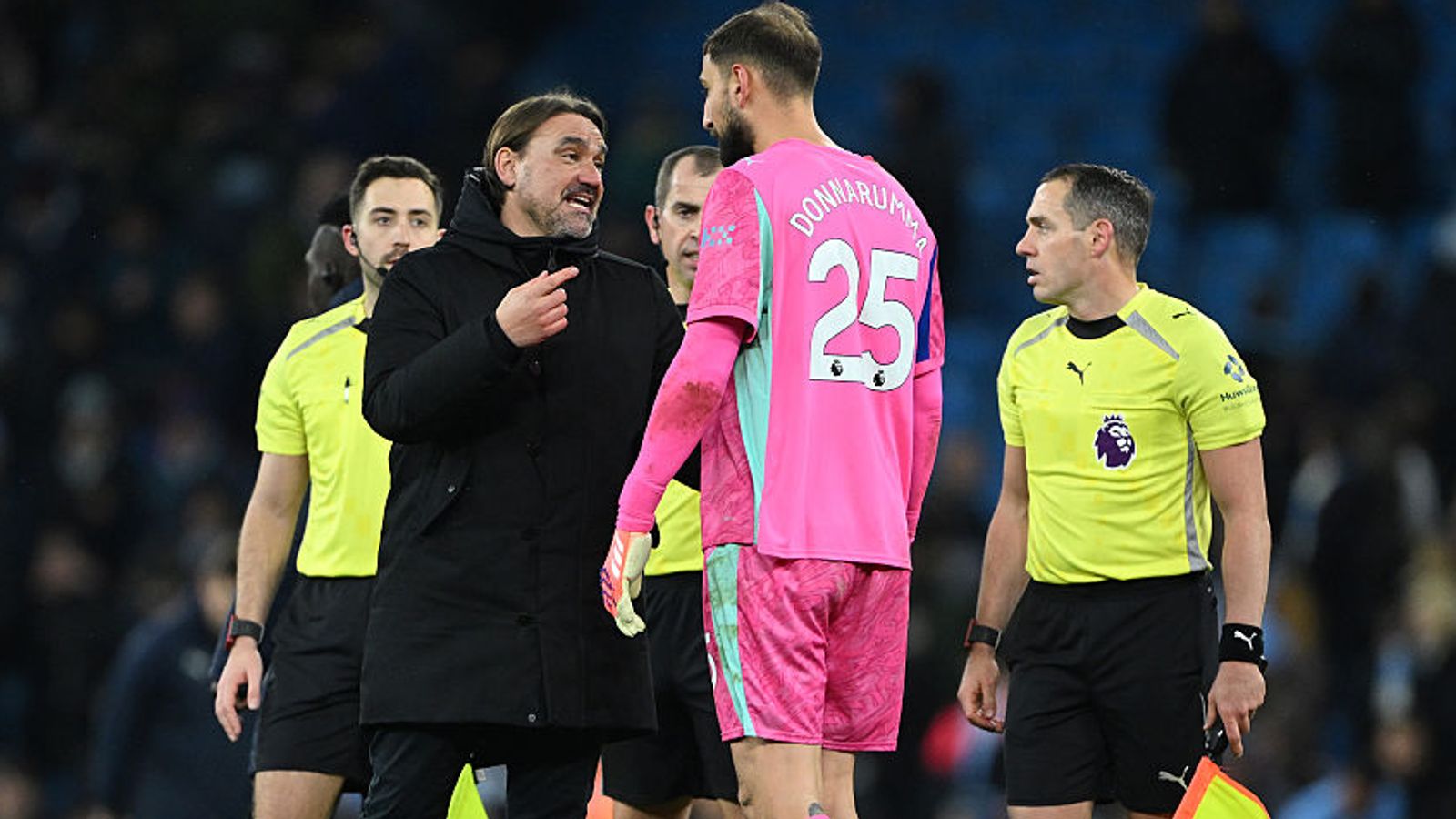
This is a performative regulatory gesture masquerading as progress, a desperate band-aid for a broken game-management culture that the Premier League itself helped cultivate. The proposed goalkeeper timeout trial—where keepers can call a brief stoppage to “reset” after repeated delays—doesn’t punish the cynical calculus that rewards every 30-second dribble before a goal kick. It institutionalizes it.
Look at what actually happens on the pitch. When Manchester City led Brighton 2-1 at the Etihad last season, Ederson received a yellow card in the 73rd minute for delaying a restart. He then promptly went down clutching his knee after a routine punt, lying prone for nearly a minute while Pep Guardiola used the unscheduled pause to bark defensive adjustments to Ruben Dias. The referee didn’t add the full time back; he added a minute and a half. City saw out the win. That is not an isolated incident. At Old Trafford, David de Gea routinely took 12 to 15 seconds to release a goal kick when United were protecting a lead under Erik ten Hag. The crowd booed, the fourth official raised the board, and the next week De Gea did it again—because the sanction was a booking that never led to a sending off, and the benefit of breaking opponent rhythm was worth far more than the risk of conceding a goal. The math is that simple.
The trial’s fundamental flaw is that it assumes keepers are the disease. They are merely the visible symptom. The deeper rot is the incentive structure that rewards every tactical foul, every substitution stroll, every ball kicked into the stands by a centre-back. Mikel Arteta’s Arsenal perfected this art against Liverpool last December: Aaron Ramsdale lingered over a goal kick, William Saliba “accidentally” wandered offside to delay a free kick, and the ball was in play for just 47 minutes of a 97-minute match. The referee added seven minutes, but those minutes are never equivalent to the true cost—the disrupted momentum, the broken flow, the sheer tedium. The trial creates a second, parallel time-keeping negotiation: the keeper calls his timeout, the referee frowns, the crowd groans, and the opposing manager screams. It adds more bureaucracy to a sport that desperately needs fewer stoppages, not more.
The implication is clear: this trial will fail because it doesn’t alter the payoff matrix. A manager like Sean Dyche, whose Everton side ground out survival on set-piece chaos and territorial scrap, will simply instruct Jordan Pickford to use his timeout in the 88th minute of a 1-0 lead, turning a five-second delay into a 20-second tactical huddle. The Premier League will then tweak the rule again, adding a second-timeout limit, and the cycle continues. The only way to break game-management culture is to make time-wasting cost what it actually costs: a direct free kick from 12 yards, a mandatory automatic yellow card for any delay over six seconds, or—the simplest fix—a stopped clock that only runs when the ball is live. Fifa refuses that, so we get this. Expect the trial to be abandoned by October, replaced by a farcical compromise that makes everyone feel progressive while managers laugh all the way to the three points. The goalkeeper timeout is not a solution. It is a surrender.