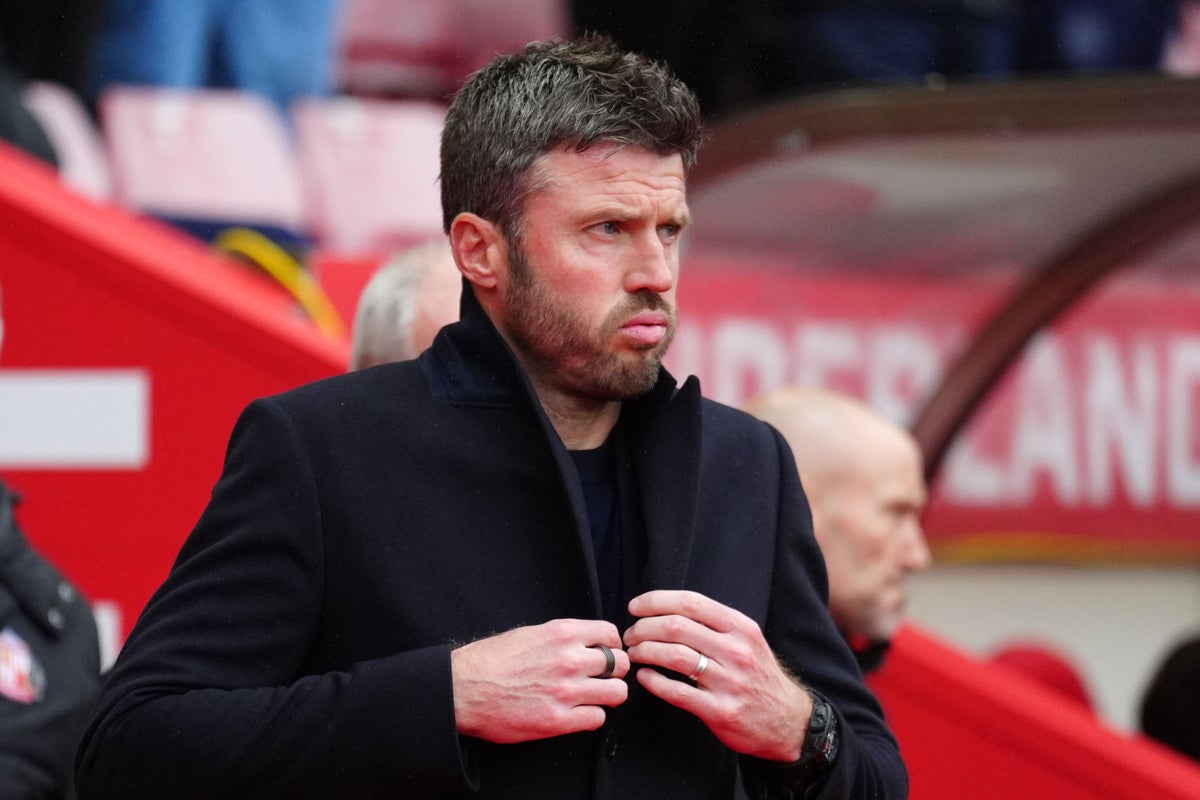
Michael Carrick is not just a stopgap; he is the only man capable of steering Manchester United back to relevance, and the club’s continued dithering over his permanent appointment is an act of self-sabotage. Since taking over in November after Erik ten Hag’s chaotic departure, Carrick has done what no United manager has done since Sir Alex Ferguson: he has made the team tactically coherent, defensively resolute, and ruthlessly efficient in transition. The proof sits in the Premier League table. United currently occupy third place with 68 points from 33 matches, having conceded only 29 goals—the second-best defensive record in the division behind Arsenal. Compare that to the same stage last season under ten Hag, when they had 59 points and had already shipped 42 goals. The transformation is staggering, and it is built on a system Carrick honed during his seven-month stint at Nottingham Forest, where he turned a relegation-threatened side into a mid-table outfit playing progressive, high-pressing football. At United, he has replicated that formula with a squad still marred by inconsistent signings. He has transformed Casemiro from a ghost of the previous campaign into a midfield metronome again, while Kobbie Mainoo has blossomed into a box-to-box force under Carrick’s direct instructions. More tellingly, United are now ten points clear of fifth-placed Aston Villa with five games remaining, effectively locking up Champions League qualification—a feat that seemed impossible when they were languishing in eighth place before his arrival.
Yet the noise from the boardroom suggests the club is still chasing ghosts. Reports continue to swirl about supposed interest in Gareth Southgate, Thomas Tuchel, and even a return for Zinedine Zidane—men who have either never managed in English football or who carry baggage from recent failures. Southgate, for all his England heroics, has never won a domestic title and would inherit a dressing room that demands immediate tactical authority, not international tournament management. Tuchel’s trophy record is undeniable, but his 81-day tenure at Bayern Munich exposed an abrasive personality that fractured squad harmony. And Zidane? He has not managed since 2021 and has no experience in the Premier League’s relentless physical and media crucible. Meanwhile, Carrick has already navigated those waters. He has won seven of his last nine league matches, including a statement 3-1 victory at the City Ground against his former club Nottingham Forest—a performance where United controlled the midfield battle through his patented 4-3-3 shape, with Bruno Fernandes dropping deep to link play and Alejandro Garnacho stretching the flanks. The numbers back the eye test: United are averaging 2.1 points per game under Carrick, compared to 1.4 under ten Hag. They have also kept ten clean sheets in his 21 league games, a rate that would have them fourth-best in the entire division over a full season. The excuses—that he inherited a talented squad, that the schedule was kind, that other teams underperformed—fall apart under scrutiny. Carrick has done this with the same squad that started the season in disarray, without a marquee signing in January, and while managing the delicate fitness of Rasmus Højlund and Luke Shaw.
The verdict is simple: Manchester United must stop looking elsewhere and give Carrick the job before the summer transfer window opens. This is not a romantic story of a club legend returning home—though Carrick certainly qualifies as a treble-winning former player. This is cold, statistical logic. United are a top-three side because Carrick has imposed structure, discipline, and an identifiable playing style. He