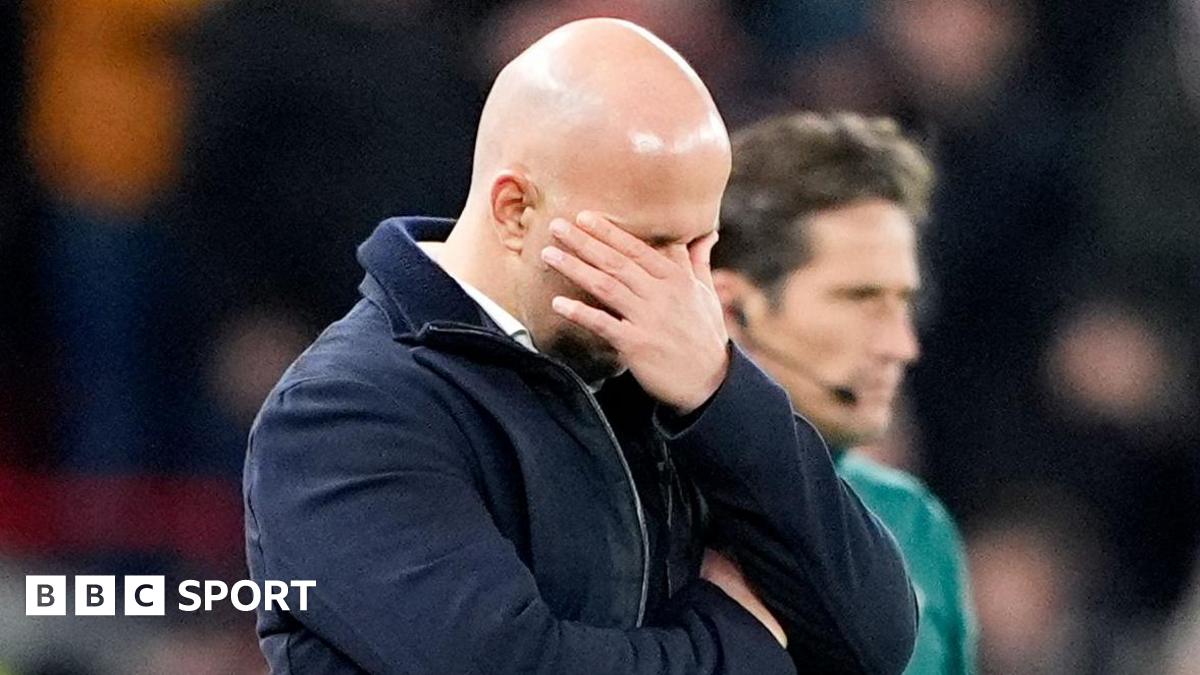
Arne Slot’s sacking at Liverpool was not a cruel twist of fortune; it was the inevitable consequence of a tactical stubbornness that refused to adapt when the Premier League’s relentless competitive pressure exposed every flaw. The Dutchman arrived hailed as the next great innovator, but his rapid decline proves that the modern top flight rewards flexibility above all else—and that even the most sophisticated system crumbles when it cannot weather a bad run.
Slot’s undoing was his slavish devotion to a single high-line, possession-dominant blueprint, even as opponents began to pick it apart with surgical precision. After an initial purple patch, central defenders Virgil van Dijk and Ibrahima Konaté were routinely left exposed because Slot refused to drop the defensive line deeper against transition maestros like Crystal Palace and Everton. The 3-2 defeat at Goodison Park was a masterclass in tactical exploitation: Sean Dyche’s direct balls over the top turned Liverpool’s backline into a scramble drill, and Slot responded not by adjusting the press triggers but by doubling down on his “philosophy.” This inability to tweak his approach mid-game—or mid-season—allowed even mid-table sides to anticipate each move. When Mohamed Salah’s individual brilliance could no longer mask systemic flaws, the results turned toxic: three consecutive home losses, including a 4-0 thrashing by Aston Villa where Unai Emery’s compact shape neutered Slot’s build-up 3-2-5 formation entirely. The data was damning: Liverpool’s expected goals against skyrocketed to the worst in the top six over the final ten matches.
The broader lesson is that the Premier League’s unforgiving environment has no patience for orthodoxy. Pep Guardiola adjusts his full-back roles; Jürgen Klopp evolved his heavy-metal pressing into controlled chaos; Mikel Arteta recalibrated Arsenal’s set-piece obsession. Slot, by contrast, treated his system as a monolith, ignoring the warning signs that his midfield—Darwin Núñez’s inefficient running aside—lacked the ball-winning legs to sustain a high press. By refusing to temporarily shift to a counter-attacking style or even rotate personnel to match opponents’ strengths, he turned a top-four squad into a seventh-place also-ran. His sacking is not an indictment of tactical theory but a reminder that theory without practical adjustment is just dogma.
Here is the blunt prediction: Liverpool will now appoint a pragmatist—someone who can blend Slot’s technical inheritance with the reactive grit the league demands—and within two windows, they will be back in Champions League contention. As for Slot, he will find work again, but his legacy will be a cautionary footnote: the man who proved that even the most lauded tactical mind becomes obsolete the moment it stops questioning itself.